

Why This Bull Market in Gold is Nowhere Near Over

Is the bull market in gold over?

Not by a long shot. If anything, this latest pullback is just a healthy correction during a once in a lifetime bull run.

The reality is that gold is a very small asset class. Collectively the market cap of the entire gold mining sector is just $600 billion. To put that into perspective, it’s roughly 1% the size of the stock market.

As a result of its small size, when gold enters a major bull market, prices can go much farther than most investors realize. All you need is 1% of the capital allocated in stocks to shift to gold and you’re looking at a 100% increase in the entire mining sector.

And investors are allocating a heck of a lot more capital to gold than 1% of their stock portfolios. Indeed, multiple Wall Street firms are now suggesting that investors shift from a 60/40 stocks to bonds allocation to a 60/20/20 stocks, bonds, precious metals allocation.

Wall Street is not the group moving large pools of capital into gold. Central banks are buying over 1,000 tons of gold per year. As a result of this, for the first time since the mid-1990s, central banks own more gold than U.S. Treasuries as a percentage of their balance sheets.

Put simply, the largest pools of capital are now moving into one of the tiniest asset classes in the financial system. In this context, the bull market is nowhere near over.

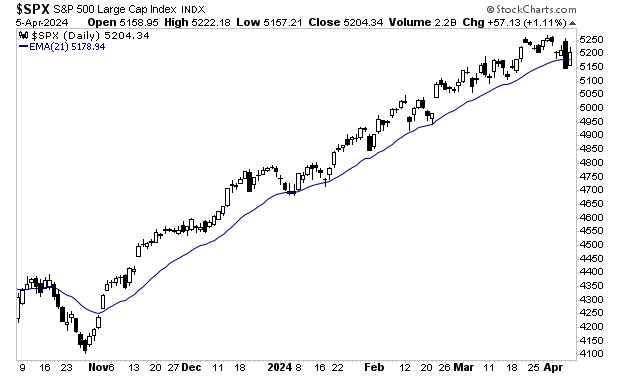
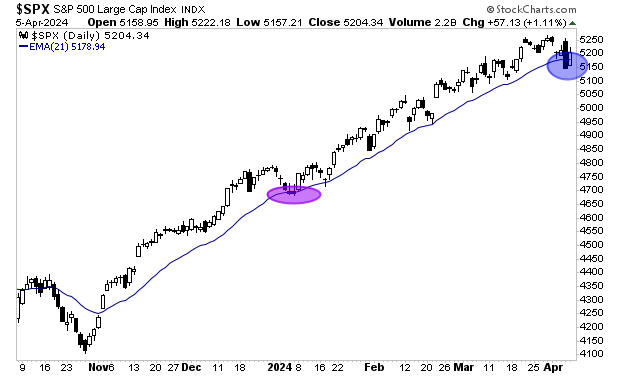
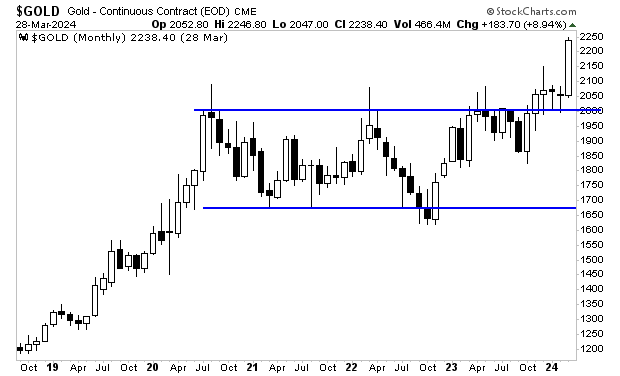
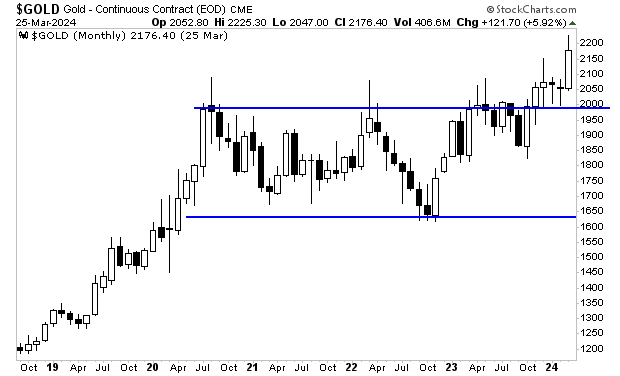
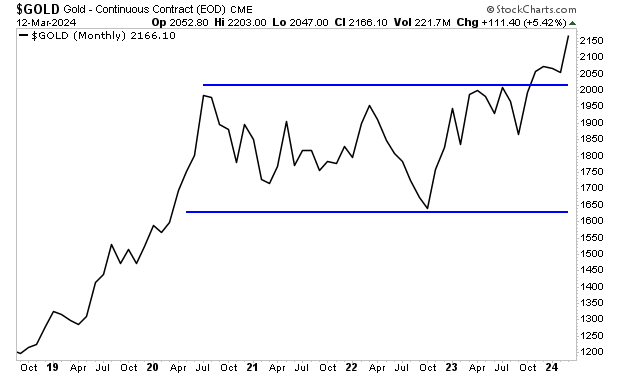
Indeed, this latest pullback has simply seen gold drop to test its 21-day exponential moving average (EMA). This is a perfectly normal development in the context of a bull market… especially when you consider just how overextended gold had become from its primary trend.

So how high can gold go before this bull market ends?

During the last major gold bull market in the 1970s, gold rose nearly 2000% from the start in 1970 to its peak in 1980.

Now consider that since 2008, when the Fed first started printing money to paper over the debts in the financial system, gold is up a mere 375%. I’m not saying gold will repeat its gains of 2,000% from the 1970s… but the point stands that we’re likely in the first few innings of this new bull market.

So if you missed this first run in gold, do NOT despair… the largest, most life-changing gains are likely yet to come!

On that note, we just published a Special Investment Report concerning FIVE secret investments you can use to make inflation pay you as it rips through the financial system in the months ahead.

The report is titled Survive the Inflationary Storm. And it explains my top five precious metals plays, including their names, their symbols, and the resources they own. These are HIGH OCTANE positions that are already up 40%, 120%, 120%, 140% and an incredible 450% this year alone

Normally I’d charge $499 for this report as a standalone item, but we are making just 100 copies available to the public.

To grab one of the last remaining copies…

CLICK HERE NOW!

Best Regards

Graham Summers

Chief Market Strategist

Posted in Central Bank Insanity, Gold, Inflation, Precious Metals | Comments Off on Why This Bull Market in Gold is Nowhere Near Over

FIVE Precious Metals Plays to Lock In During This Pullback

Precious metals are taking a breather after a historic run.

In investing, nothing goes straight up or straight down. And gold and silver had both become egregiously overbought coming into last week. As Subu Trades notes, gold had rallied for 9 straight weeks and was a full 28% above its 200-day simple moving average. Historically, his analysis shows clearly that gold usually experiences a large pullback shortly after a run of this magnitude.

And that was precisely what happened.  Gold fell ~6% yesterday in its largest single day drop. Gold miners fell even further, with the Gold Miners ETF (GDX) dropping 15%!

In light of this, many investors are asking if the historic bull market in gold is over.

The answer to that question is a resounding “NO!”

The reality is that gold is experiencing a tectonic shift in which EVERY major investment group is beginning to buy the precious metal.

  • Individuals are literally lining up around the world to buy gold.
  • Financial institutions are urging their institutional clients to get exposure to the precious metal with some even going so far as to suggest changing the 60/40 stocks to bonds allocation that has been the standard for the last 50 years to a 60/20/20 allocation of stocks, bonds and precious metals.
  • Even central banks have become net buyers of gold for the first time in decades. Collectively, they’ve bought 1,000 tons of the precious metal every year since 2020!

Put simply, gold is experiencing an unprecedented amount of buying power for the first time in decades. And this is not about to change either: investors worldwide have realized that central banks are about to unleash another inflationary storm and are moving their capital to prepare for what’s coming.

You should do the same.

On that note, we just published a Special Investment Report concerning FIVE secret investments you can use to make inflation pay you as it rips through the financial system in the months ahead.

The report is titled Survive the Inflationary Storm. And it explains my top five precious metals plays, including their names, their symbols, and the resources they own. These are HIGH OCTANE positions that are already up 40%, 120%, 120%, 140% and an incredible 450% this year alone

Normally I’d charge $499 for this report as a standalone item, but we are making just 100 copies available to the public.

To grab one of the last remaining copies…

CLICK HERE NOW!

Best Regards

Graham Summers

Chief Market Strategist

Posted in Gold, Precious Metals | Comments Off on FIVE Precious Metals Plays to Lock In During This Pullback

The Great Global Melt Up is Not Over… Yet

The Great Global Melt Up is taking a breather… but do NOT mistake this breather/ correction for the end.

Globally, the world is awash is too much debt. The US has a Debt to GDP ratio of 120%. Europe is ~100%, though numerous large countries (France, Italy, Spain) are well over that. Japan has a Debt to GDP of 200%. And even China has a Debt to GDP ratio of 120% when you include local government debt that is typically kept off the national balance sheet calculations.

Put simply, for 50+ years, ever since the world ended the Gold Standard, governments have engaged in a massive debt binge. And there is no way they can ever pay this back.

Thus, the only option, as far as policymakers are concerned, is to “print” their way out of this situation by devaluing their currencies. This is the “inflate it away” strategy for dealing with a debt crisis: by devaluing your currency you ensure that every future payment of the debt is worth less in real terms.

This process has already begun.

Globally central banks have already cut rates 123 rate times. Every major central bank (the Fed, the European Central Bank, the Bank of Japan, the Bank of England and the Swiss National Bank) is now easing monetary conditions. And it’s only a matter of time before they introduce another round of money printing/ Quantitative Easing.

This has created what I call the Great Global Melt Up: a situation in which risk assets (stocks, real estate, gold, etc.) erupt higher as investors are forced to move their capital out of cash to escape the currency devaluation.  

This process is nowhere near over. And you NEED to take advantage of it to make as much money as possible before it ends.

Why?

Because when this bubble bursts, as all bubbles do, it’s going to trigger a crisis that will make 2008 look like a picnic.  So the goal for investors is to ride this bubble for as long as possible, and then get out before the whole mess comes crashing down.

On that note, we just published a Special Investment Report concerning THREE investments poised to produce extraordinary gains during the Great Global Melt Up. As I write this, all three of them are roaring to new all-time highs.

Normally I’d charge $499 for this report as a standalone item, but based on what is happening in the markets today we are making just 100 FREE copies available to the public.

To grab one of the last remaining copies…

CLICK HERE NOW!

Best Regards

Graham Summers, MBA

Chief Market Strategist

Phoenix Capital Research

Posted in Melt Up | Comments Off on The Great Global Melt Up is Not Over… Yet

Stocks Are Always the Last Asset to “Get It”

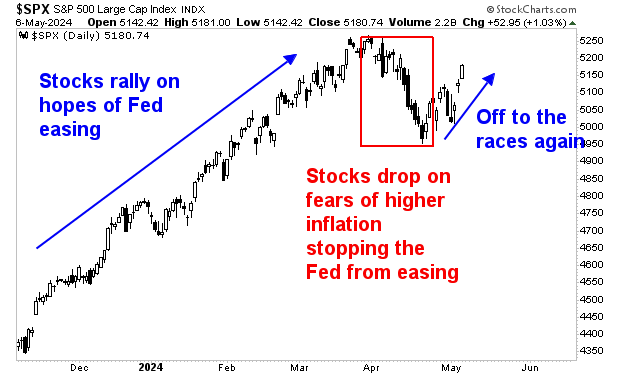
Stocks remain blissfully unaware of the problems in the debt/ credit markets.

While stocks get most of the attention from the media due to their greater volatility (greater volatility means a greater likelihood of producing significant gains quickly), the reality is that stocks are in fact the junior-most asset class in terms of capital structure.

What I mean by this is that if a company were to go bankrupt, stockholders would be THE last people to get paid after all the debt and creditors. As a result of this, the credit markets, NOT the stock markets are usually the first markets to react to changes in the economy.

Put simply: credit investors, particularly high yield credit investors (investors in “junk bonds”) are usually much more sophisticated and sensitive to potential risks because if things go wrong there is a high likelihood that they lose a LOT of money.

I mention this because the high yield credit ETF (HYG) has taken out its bull market trendline for the first time since the April lows. Even worse, HYG has failed to reclaim this line despite multiple interventions by the Trump administration.

This is a MAJOR warning that something BAD is brewing in the credit markets. We get confirmation of this from the Senior Loans (another credit instrument). Here again, the index has broken below both its bull market trendline. It’s also broken its 8-day exponential moving average (EMA) as well as its 21-EMA. This is a major signal that momentum has broken down and something BAD is coming.

Stocks remain in la la land about these risks. But they likely won’t for much longer. We’re already beginning to see this situation spread to major financial firms. Jeffries Financial Group (JEF) is one of the first firms to reveal it has exposure to these issues. JEF has over $60 billion in assets and its shares are currently imploding.

Put simply, something VERY bad is brewing in the banking system. And the big question for investors is whether these issues will trigger a stock market crash. 

To answer this, I rely on a proprietary indicator that has triggered before every major meltdown in the last 50 years. This signal caught the 1987 crash, the Tech Crash, the Great Financial Crisis and more.

We detail this trigger, how it works, and what it’s saying about the markets today in How to Predict a Crash.

Normally we’d sell this report for $499, but in light of its recent warning, we’re making 99 copies available to the investing public.

To pick up one of the last copies…

CLICK HERE NOW!

Graham Summers, MBA

Chief Market Strategist

Phoenix Capital Research
Posted in Bank Crisis, stock collapse? | Comments Off on Stocks Are Always the Last Asset to “Get It”

Will Regional Banks Trigger a “Credit Event” For the Financial System?

Something BAD is brewing in the regional banks. And before we shrug it off, we need to consider that regional banks:

  1. Have over $5 TRILLION in U.S. deposits.
  2. Account for 50% of all industrial/ commercial loans in the US.
  3. Originate 80% of all mortgages.
  4. Account for 45% of all personal loans.

Put simply, this is NOT a small, insignificant industry. Yes, the Big Banks (Wells, JP Morgan, Bank of America) still have an inordinate amount of clout/ power in the industry… but regional banks are systemically important and have a profound impact on the real economy.

And they also appear to be up to their eyeballs in bad loans.

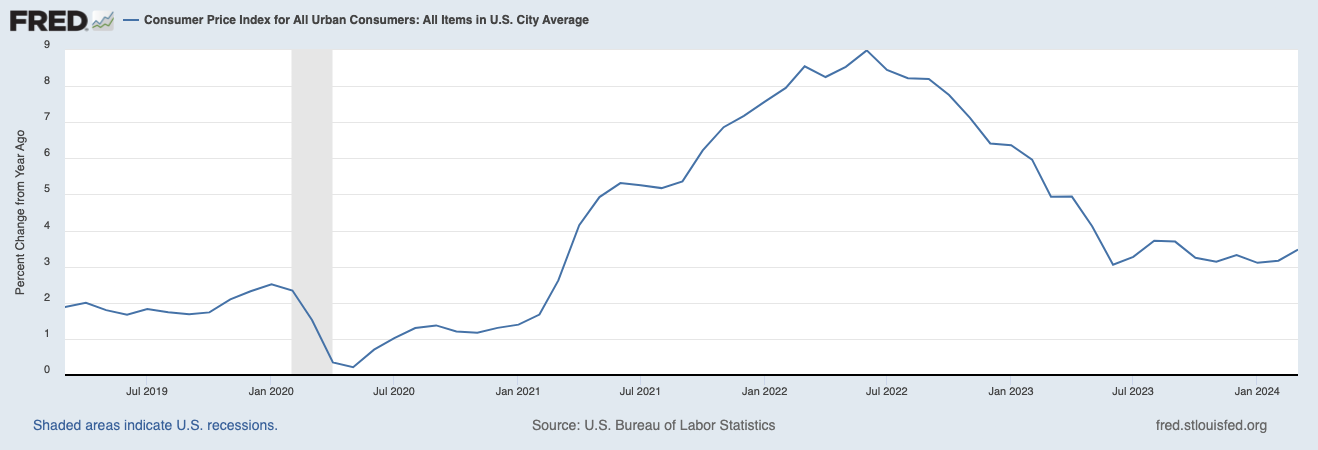
The commercial real estate market is imploding in the U.S. As I write this, vacancy rates for office property have hit record highs of nearly 20%. And as of August 2025, some 7% of ALL commercial real estate loans (not just office loans) are delinquent. And that rate has gone up for six months straight.

Regional banks are on the hook for a lot of this.

According to HedgieMarkets, commercial real estate loans comprise 44% of regional bank portfolios (compared to just 13% for the big banks). And apparently there is considerable fraud in this space. Two large regional banks Zions and Western Alliance have revealed tens of billions of dollars in loan provisions and write-offs due to fraud from a single failed auto-parts manufacturer, First Brands Group.

This is why the Regional Bank ETF (KRE) is crashing: no one knows how big the problem (bad loans/ fraud) really is in the industry. Remember, we’re only talking about a handful of companies (First Brands Group, subprime auto-lender Tricolor, etc.) accounting for tens of billions of dollars in bad loans/ fraud.

The larger question is if this issue will metastasize into a crisis. Remember, in 2023, the regional banking system almost collapsed, resulting in the S&P 500 losing 10% in a matter of weeks. This doesn’t seem too dramatic until you consider that A) both the Treasury and the Fed had to get involved to stop the collapse and B) the issues that triggered that crisis were never resolved… they were just “papered over.”

This is why JP Morgan CEO Jamie Dimon recently commented that “when you see one cockroach, there are probably more”... and that “Everyone should be forewarned” by what is happening in regional banks today.

This is also why shares in banks like Jeffries are down over 30% since mid-September.

And it’s why investors need to be asking themselves “is another credit event just around the corner?”

To answer this, I rely on a proprietary indicator that has triggered before every major meltdown in the last 50 years. This signal caught the 1987 crash, the Tech Crash, the Great Financial Crisis and more.

We detail this trigger, how it works, and what it’s saying about the markets today in How to Predict a Crash.

Normally we’d sell this report for $499, but in light of its recent warning, we’re making 99 copies available to the investing public.

To pick up one of the last copies…

CLICK HERE NOW!

Graham Summers, MBA

Chief Market Strategist

Phoenix Capital Research
Posted in Bank Crisis, stock collapse? | Comments Off on Will Regional Banks Trigger a “Credit Event” For the Financial System?

Is the U.S. About to Experience Another Bank Crisis?

Is the U.S. about to experience another banking crisis?

Shares in banks, and particularly regional banks, imploded yesterday. At one point the regional bank index (KRE) was down 7%.

The issues pertain to two recent bankruptcies in the subprime auto-lending and auto parts manufacturing industries: TriColor Holdings and FirstBrands.

About a month ago, a large subprime auto lender, TriColor Holdings, filed for bankruptcy. At the time of bankruptcy, the firm had assets and liabilities somewhere between $1 billion and $10 billion. Obviously, this was not a massive company, but the details of the situation are concerning.

Subprime auto lending is some of the riskiest lending in the world. In its simplest rendering, subprime auto lending consists of lending high-interest loans to low-income and undocumented borrowers. The lender then usually packages up the loans into securities, and sells them in a secondary market to hedge funds/ banks/ etc.

By packaging these loans, firms are able to claim they are less risky, allowing them to sell them to banks and other institutional investors who wouldn’t be able to own them otherwise.

If this sounds familiar to you, it’s essentially the same scheme that created and then imploded the housing bubble in 2003-2007.  And once again, it appears that multiple major financial institutions were in on the scheme.

As I’m writing this, JP Morgan, Fifth Third Bank and Barclays have declared they have exposure in the hundreds of millions of dollars to TriColor. Obviously, these are small losses given the size of these institutions (Fifth Third is the smallest bank and has assets and liabilities in the hundreds of billions of dollars).

However, the issue of fraud is triggering some concerns.

Some 29,000 of the loans TriColor made involved vehicles that already had loans outstanding. And some 40% of the loans outstanding shared similar characteristics suggesting there might have been multiple loans made using the same vehicle as collateral.

Put simply, it appears TriColor was cooking the books to generate as many loans as possible, e.g. lending out two or even three loans for the same car, which means the car can’t possibly serve as correct collateral on the debt.

This is rattling the credit markets. True, the subprime auto lending market is only $20 billion in size (subprime mortgages are over $800 BILLION in size), but the situation is raising concerns that loose lending standards and derivatives might once again be an issue for the credit markets.

This situation is being made worse by the bankruptcy of First Brands, an auto parts manufacturer that also collapsed in late September. Here again, there are allegations of cooking the books, though the losses are larger (initial estimates put the fallout closer to $10 billion), and the fallout is worse.

Jeffries Financial Group (JEF) has claimed that its exposure to FirstBrands is in the ballpark of $750 million via one of its investment funds. However, JEF shares are down 30% in roughly one month, suggesting things are in fact worse behind the scenes.

Indeed, yesterday was a bloodbath in the banking sector with individual regional banks (Zion Bancorp, Western Bank Alliance, etc.) down 12%. Heck even the big banks (Wells Fargo, JP Morgan) plunged over 2% on the day.

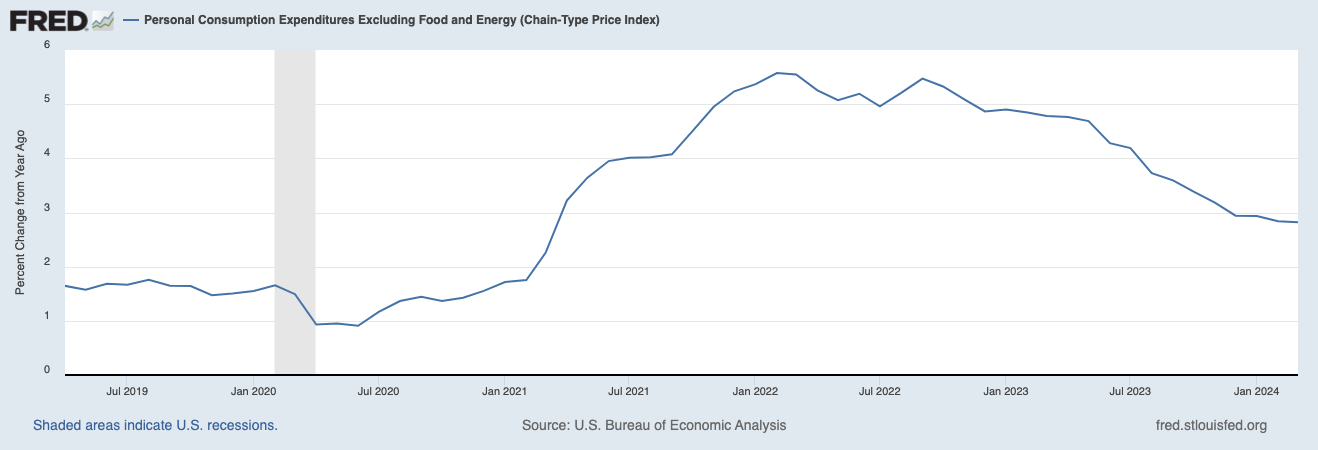
The issue is spreading throughout the credit markets. The high yield credit ETF (HYG) has taken out its bull market trendline. Even worse, it’s been rejected after a bounce, indicating that what used to be support is now resistance.

Put simply, something VERY bad is brewing in the banking system. And the big question for investors is whether these issues will trigger a stock market crash. 

To answer this, I rely on a proprietary indicator that has triggered before every major meltdown in the last 50 years. This signal caught the 1987 crash, the Tech Crash, the Great Financial Crisis and more.

We detail this trigger, how it works, and what it’s saying about the markets today in How to Predict a Crash.

Normally we’d sell this report for $499, but in light of its recent warning, we’re making 99 copies available to the investing public.

To pick up one of the last copies…

CLICK HERE NOW!

Graham Summers, MBA

Chief Market Strategist

Phoenix Capital Research
Posted in Bank Crisis, stock collapse? | Comments Off on Is the U.S. About to Experience Another Bank Crisis?

Warning: China KNOWS the Trump Administration’s Weakness

Stocks are now in danger of a serious sell-off.

The Trump administration is currently negotiating its single most important trade deal with China. The President and his team have been able to sign deals with a number of other countries already, but trade between China and the U.S. is THE issue as far as global trade is concerned. Exports/imports between the two nations are ~$700 billion per year.

The problem with all of this is that the Trade War has revealed the Trump administration’s “Achilles heel” to China… namely that the President Trump cannot stomach a stock market decline.

Let’s wind the clocks back to April.

The Trump administration announced global tariffs against every major trade partner (including China) on April 2nd. This triggered a stock market meltdown with the S&P 500 dropping 18% in a matter of weeks, erasing $11 trillion in capital.

The collapse was so dramatic that it actually resulted in a pullback in consumer spending with numerous companies including Southwest Airlines, Chipotle, PepsiCo and even Walmart noting that consumer spending was falling off a cliff in ways not seen since the pandemic!

THIS, not trade-related issues, was what forced the President to introduce his “90 day pause” to the Trade War on April 9th. By doing this, the President stopped the bloodbath, leading stocks to bottom and begin rallying shortly thereafter.

Since that time, the President has responded to every stock market pullback by announcing some “breakthrough” or “great deal” in trade to get stocks ripping higher again. He’s literally broadcast his greatest weakness to China.

This has led to what investors call the “Taco Trade” or “Trump Always Chickens Out” meme. The most recent example of this occurred just last week when the President threatened China with additional tariffs of 100% on Friday, only to turn around by Monday and suggest that he will still meet with China’s President Xi and that he’s hopeful a deal can be made.

What changed between Friday and Monday?

The S&P 500 fell almost 3% on Friday and the futures session looking like a bloodbath over the weekend.

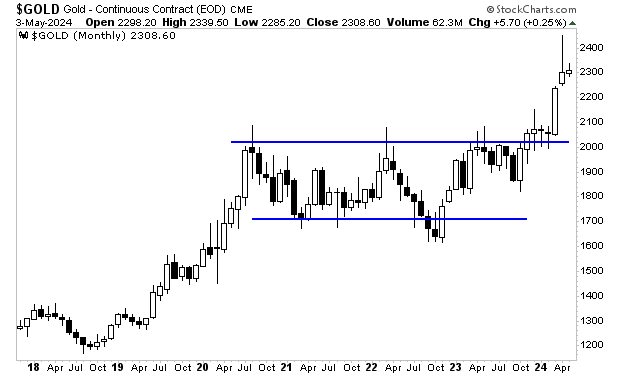
So again, the Trade War has revealed the Trump administration’s “Achilles heel” to China. The President CANNOT handle a stock market decline. And with the China/ US Trade Deal deadline just a few weeks away on November 1st what are the odds that China is going to exploit this weakness to get the best possible deal for itself?

Which means…

The door is open to a serious stock market decline in the next few weeks. Stocks have already proven susceptible to a bloodbath based on a Trump social media post… how will they react if China announces something MAJOR related to a standoff as far as trade is concerned?

Could this trigger a stock market crash?

To answer this, I rely on a proprietary indicator that has triggered before every major meltdown in the last 50 years. This signal caught the 1987 crash, the Tech Crash, the Great Financial Crisis and more.

We detail this trigger, how it works, and what it’s saying about the markets today in How to Predict a Crash.

Normally we’d sell this report for $499, but in light of its recent warning, we’re making 99 copies available to the investing public.

To pick up one of the last copies…

CLICK HERE NOW!

Graham Summers, MBA

Chief Market Strategist

Phoenix Capital Research
Posted in stock collapse? | Comments Off on Warning: China KNOWS the Trump Administration’s Weakness

Warning: Things Are Starting to Deteriorate in the Real Economy

Cracks are beginning to form in the real economy.

And the markets know it.

The overall stock market has been extraordinarily strong since the April lows. And for the most part, the rally has been broad-based involving most sectors in the S&P 500.

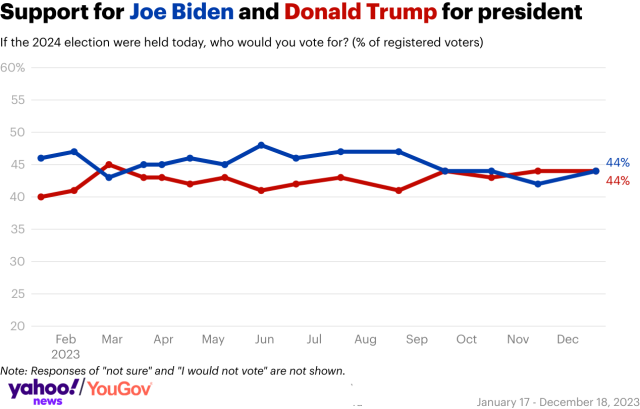
You can see this clearly in the below chart in which overall breadth rose steadily from April through September. This was a clear signal that this was a raging bull market in which most stocks were rallying. Put another way, practically every market sector was participating in the rally.

However, starting in September, things began to change. Breadth peaked in mid-September and has since been struggling to catch a bid. This was a red flag momentum was stalling out and the rally was beginning to weaken.

Indeed, multiple sectors with close ties to the real economy have been struggling. Specifically, homebuilders, banks, and retailers are all breaking down. This is a warning that despite the stock market hitting new all-time highs, thing are NOT well in the real economy. The breakdown in homebuilders is particularly concerning because eight of the 11 recessions since World War II started in housing. In this sense, housing can sometimes be construed as “the canary in the coal mine” for the overall economy.

In this context, the big question for investors is whether this deterioration in these economically sensitive sectors indicates the economy is rolling over into a recession that will trigger a stock market crash. After all, if the REAL economy is collapsing, it’s only a matter of time before stocks crater.

To answer this, I rely on a proprietary indicator that has triggered before every major meltdown in the last 50 years. This signal caught the 1987 crash, the Tech Crash, the Great Financial Crisis and more.

We detail this trigger, how it works, and what it’s saying about the markets today in How to Predict a Crash.

Normally we’d sell this report for $499, but in light of its recent warning, we’re making 99 copies available to the investing public.

To pick up one of the last copies…

CLICK HERE NOW!

Graham Summers, MBA

Chief Market Strategist

Phoenix Capital Research
Posted in stock collapse? | Comments Off on Warning: Things Are Starting to Deteriorate in the Real Economy

Is This a Dead Cat Bounce… Or Are Stocks Off to the Races Again?

Stocks collapsed on Friday when President Trump threatened another trade war.

In this particular instance, the President claimed that China was threatening to impose export controls on numerous items that are critical for technology, specifically rare earths elements. To counter this threat, President Trump suggested he would impose new tariffs of 100% on all Chinese imports starting November 1st 2025.

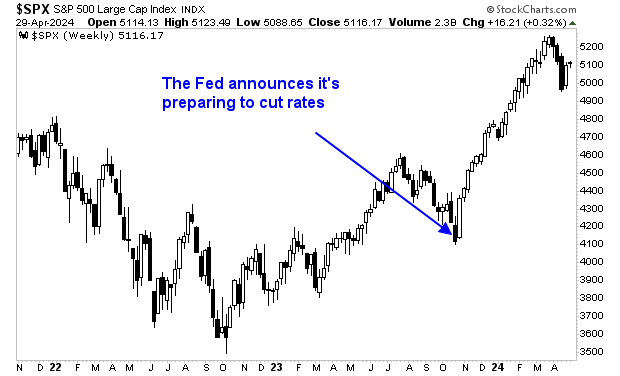
Stocks nose-dived on the news with the S&P 500 finishing down almost 3%. The technical damage from the move was significant with the index taking out both its 8-day exponential moving average (EMA) as well as the all-important 21-EMA for the first time since the April bottom.

While this move was painful, it was NOT unexpected. Stocks had gone practically straight up for the better part of six months and were more than due for a correction. In investing, nothing goes straight up or down. And a 32% rally in six months is an extraordinary move!

As I write this Monday morning, stocks are bouncing due to President Trump announcing that he will in fact meet with China’s President Xi in a few weeks which suggests that his prior threats of increased tariffs will not materialize.

In this context, the big question for investors is whether this is simply a “dead cat bounce” and the bull market is OVER… or if markets were once again duped by President Trump into believing the worst, only for the President to reverse course and send stocks to new all-time highs as has been the case numerous times since the April lows.

To answer that, I rely on a proprietary indicator that has triggered before every major meltdown in the last 50 years. This signal caught the 1987 crash, the Tech Crash, the Great Financial Crisis and more.

We detail this trigger, how it works, and what it’s saying about the markets today in How to Predict a Crash.

Normally we’d sell this report for $499, but in light of its recent warning, we’re making 99 copies available to the investing public.

To pick up one of the last copies…

CLICK HERE NOW!

Graham Summers, MBA

Chief Market Strategist

Phoenix Capital Research
Posted in stock collapse? | Comments Off on Is This a Dead Cat Bounce… Or Are Stocks Off to the Races Again?

Is the Bull Market Over?

While yesterday’s sell off was ugly, there were multiple warnings that stocks were due for a pullback.

For one thing, the S&P 500 has been in a confirmed uptrend for over 110 days. That is an EXTREMELY long period of time and highly unusual. Historically there have only been 12 such instances since the S&P 500 was introduced in 1957. So this was a major warning that stocks were due for a pullback.

On top of this, high yield credit had begun to break down. Because these bonds have a significant chance of default even during periods of economic growth, they tend to be highly sensitive to changes in the macro environment. As such, they typically lead stocks both to the upside and the downside when the markets turn.

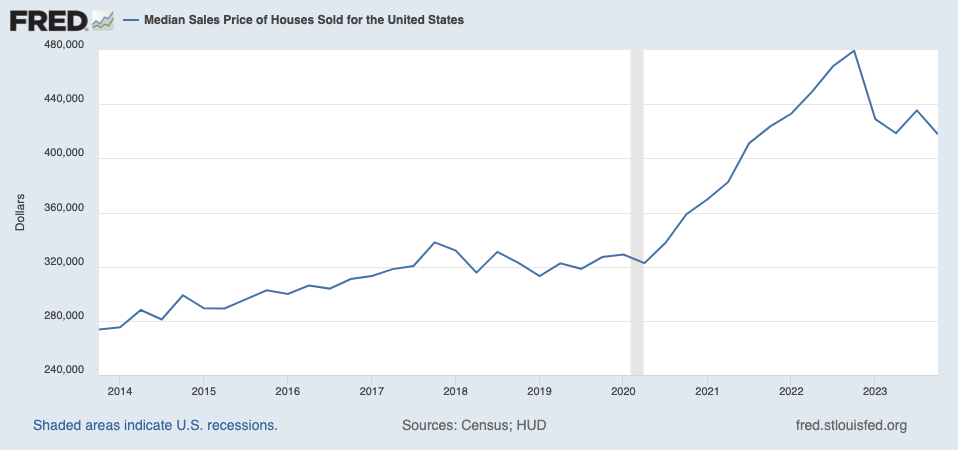
As you can see, the High Yield Credit ETF (HYG) had broken down below both its 8-day exponential moving average (EMA) as well as its 21-EMA for the first time since the April bottom. This was a major warning that stocks were going to roll over.

Finally, there was the sentiment to consider. Social media was rife with investors bragging about their returns year to date. I’d seen more screenshots of P&L statements in the last week than at any time in the last year. This kind of environment suggested it was time for the market to deliver a serving of humble pie. I’m not saying I’m happy that people lost money yesterday… I’m merely pointing out that when everyone is bragging about how much money they’re making, it’s usually sign a correction is coming.

The #1 question for investors now is whether this is the start of a garden variety pullback/ correction… or if the bull market is officially over.

To answer that, I rely on a proprietary indicator that has triggered before every major meltdown in the last 50 years. This signal caught the 1987 crash, the Tech Crash, the Great Financial Crisis and more.

We detail this trigger, how it works, and what it’s saying about the markets today in How to Predict a Crash.

Normally we’d sell this report for $499, but in light of its recent warning, we’re making 99 copies available to the investing public.

To pick up one of the last copies…

CLICK HERE NOW!

Graham Summers, MBA

Chief Market Strategist

Phoenix Capital Research
Posted in stock collapse? | Comments Off on Is the Bull Market Over?

Gold is Breaking Out Against Every Major Currency… Again!

As I noted yesterday, gold is breaking out again. The precious metal, priced in dollars, erupted higher this week breaking out of another consolidation period.

This phenomenon isn’t just about the $USD. Gold has also broken out to the upside against the Euro, Yen and Franc.

The time to prepare for what’s coming is NOW before it arrives.

On that note, we just published a Special Investment Report concerning FIVE secret investments you can use to make inflation pay you as it rips through the financial system in the months ahead.

The report is titled Survive the Inflationary Storm. And it explains in very simply terms how to make inflation PAY YOU.

We are making just 100 copies available to the public.

To pick up yours, swing by:

CLICK HERE NOW!

Best Regards

Graham Summers

Chief Market Strategist

Posted in Gold, Hard Assets | Comments Off on Gold is Breaking Out Against Every Major Currency… Again!

Every Major Economy Is Now Pushing For a Melt-Up

Japan just joined the “inflate or die” party.

Globally, central banks are engaged in an aggressive monetary easing cycle. The European Central Bank (ECB) has already cut rates eight times… The Bank of England (BoE) has cut rates five times…The Swiss National Bank (SNB) has cut rates six times to ZERO. And the Fed just implemented its first cut in 2025, with the Fed dot plots forecasting two more rate cuts by year end.

Why are central banks doing this? Don’t they understand that this easing will likely trigger another round of inflation?

Central banks are easing monetary conditions because they have no choice.

The pandemic ended over two years ago… but governments have NOT returned to pre-pandemic levels of spending. Globally governments continue to engage in massive fiscal stimulus programs/ overspending. Because taxes are inadequate to finance this it means that governments are running huge fiscal deficits. And these deficits require the large-scale issuance of debt to finance.

Put simply, globally the debt bubble is increasing at an alarming rate.

Now, there are three ways of dealing with excess debt:

  1. Pay it off/ grow out of it.
  2. Default.
  3. Attempt to “inflate it away” by devaluing your currency so each future debt payment is worth less in real terms.

Central banks are opting for #3. And as I noted earlier, Japan has finally joined the “inflate or die” party.

Earlier this week, the people of Japan elected Sanae Takaichi, a pro-fiscal spending, pro-inflation candidate. This marks a massive shift globally as it signals that EVERY major government in the world (the US, China, Japan, and Europe) is now PRO-fiscal spending.

This is only going to worsen the debt situation… which is going to force central banks to ease even more aggressively. And the markets know it!

Gold hit a new all-time high yesterday. As I write this it’s now within spitting distance of $4,000 per ounce. Bitcoin is also at new all-time highs. And so are stocks.

This is the Great Global Melt Up. And it is nowhere near over. Remember, EVERY major country in the world is now in a race to devalue its currency. This means that trillions of Dollars/ Euros/ Yen in capital is fleeing cash and moving into risk assets.

The time to profit from this is NOW… because when this melt up ends and the bubble bursts… the world will experience a debt crisis that will make 2008 look like a picnic.

On that note, we just published a Special Investment Report concerning THREE investments poised to produce extraordinary gains during the Great Global Melt Up. As I write this, all three of them are roaring to new all-time highs.

Normally I’d charge $499 for this report as a standalone item, but based on what is happening in the markets today we are making just 100 FREE copies available to the public.

To grab one of the last remaining copies…

CLICK HERE NOW!

Best Regards

Graham Summers, MBA

Chief Market Strategist

Phoenix Capital Research
Posted in Hard Assets, Melt Up | Comments Off on Every Major Economy Is Now Pushing For a Melt-Up

AI+ Inflation= a Once in a Lifetime Boom in Hard Assets

The bull market in hard assets is accelerating, NOT slowing down.

Gold first cleared $3,800 per ounce on September 26th, 2025. Today, less than two weeks later, it’s over $3,900 per ounce.

Gold is not the only hard asset ripping higher, either.

Silver was below $46 two weeks ago. Today it’s over $48 per ounce. Platinum, uranium, and other hard assets are exploding higher too.

What is going on here?

What’s going on is that investors, both institutional and individual, are shifting capital into hard assets in a major way for the first time in decades. And because these markets are so small (the entire precious metals mining complex is $600 billion), these markets are going vertical.

There’s a second component driving this boom in hard assets as well: the Artificial Intelligence (AI) revolution. 

The reality is that the AI revolution requires a staggering amount of hard assets/ commodities to function. Depending on its size, a single AI-related data center can require:

1. One to five tons of lithium

2. 30-100 tons of copper

3. Up to one ton of silicon.

4. 10,000-50,000 tons of concrete

5. 1,000 to 5,000 tons of steel

As I write this, there are over 4,000 data centers under development in the U.S. Bear in mind, we’re just talking about data centers here. We’re not even considering the natural resources requirements for robots, electric vehicles, appliances and more.

A single AI-powered robot can require:

  1. 25+ pounds of silicon
  2. 2.5-10 pounds of copper
  3. 25-125 pounds of steel or aluminum
  4. 12-60 pounds of lithium, cobalt and nickel (if it runs on EV batteries)
  5. 5-25 pounds of plastic

And some experts are anticipating hundreds of thousands if not millions of robots to be manufactured by 2030!

Put simply, between central bank money printing/ inflation and the demands from AI, hard assets are in a once in a decade position to generate life-changing returns.

The time to act on this is NOW, before this major trend is over.

On that note, we just published a Special Investment Report concerning FIVE secret investments you can use to make inflation pay you as it rips through the financial system in the months ahead. They’re already up 17%, 25%, 25%, 40% and 42%. And that’s just in the last month!

The report is titled Survive the Inflationary Storm. And it explains my top five gold mining plays, including their names, their symbols, and the resources they own.

Normally I’d charge $499 for this report as a standalone item, but we are making just 100 copies available to the public.

To grab one of the last remaining copies…

CLICK HERE NOW!

Best Regards

Graham Summers

Chief Market Strategist

Posted in AI, Hard Assets | Comments Off on AI+ Inflation= a Once in a Lifetime Boom in Hard Assets

Investors Have a Once in a Lifetime Opportunity Here

Gold has now cleared $3,800 per ounce and silver has hit $48 per ounce. Those mining companies that produce these metals are experiencing double if not triple digit gains.

And by the look of things, this trend is nowhere near over.

The reality is that a tectonic shift has taken place in the financial system. For the first time in decades, investors, both individual and institutional are shifting from paper assets (Treasuries) to hard assets (precious metals and other assets that cannot be devalued).

Why are they doing this?

Because they have realized the dark truth about the current macro environment: that there is no path forward that doesn’t involve money printing.

The reality is that the pandemic opened the door to truly staggering amounts of money printing/ stimulus. And while governments and central banks have slowed the pace of these interventions, no major government in the world has brought spending back to pre-pandemic levels.

Put simply, the world is in a new normal or monetary regime: one that is based on fiscal dominance/ overspending.

In this context, central banks have no choice but to print money to monetize/ inflate away debts. The alternative is to allow the bond markets to revolt, which would lead to a debt crisis.

In simple terms, the dominant theme in the financial system today is inflate or die. And policymakers are opting to inflate.

This is why hard assets are skyrocketing. It’s why stocks are in a melt-up (stocks are fundamentally an inflation hedge to a point). And it’s why investors have a once in a lifetime opportunity to ride a tsunami of liquidity as it flows into small, under-allocated asset classes (precious metals and precious metals miners).

Case in point, the stock market is over $60 trillion in size. The ENTIRE precious metals mining complex is only $600 billion in size. If even a small portion of capital allocated to stocks begins to shift into this space, truly life changing profits can be achieve.

On that note, we just published a Special Investment Report concerning FIVE secret investments you can use to make inflation pay you as it rips through the financial system in the months ahead. They’re already up 17%, 25%, 25%, 40% and 42%. And that’s just in the last month!

The report is titled Survive the Inflationary Storm. And it explains my top five gold mining plays, including their names, their symbols, and the resources they own.

Normally I’d charge $499 for this report as a standalone item, but we are making just 100 copies available to the public.

To grab one of the last remaining copies…

CLICK HERE NOW!

Best Regards

Graham Summers

Chief Market Strategist

Phoenix Capital Research
Posted in Central Bank Insanity, Gold, Melt Up | Comments Off on Investors Have a Once in a Lifetime Opportunity Here

This is the Most Important Trend in the Markets Right Now

The financial system is giving investors a major signal.

That signal?

That large pools of capital, as in tens if not billions of dollars, are moving away from paper assets to hard assets.

See for yourself.

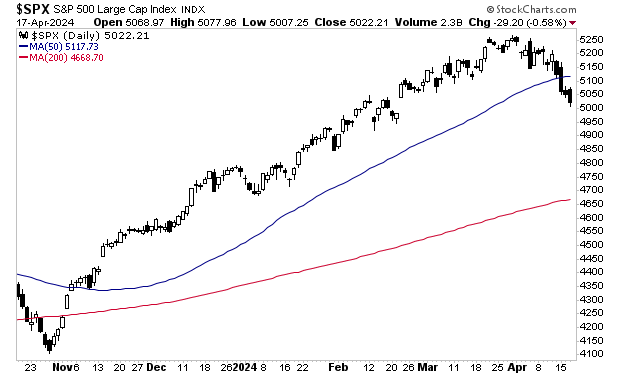
Here’s a chart of the 10-Year U.S. Treasury. This is the #1 paper asset in the world, serving as the bedrock of our current fiat/debt-based financial system. As you can see, it was in a downtrend from 2020 to 2023. It has since traded sideways, effectively going nowhere.

Now compare this performance to that of gold, a hard asset, which cannot be devalued.

How about silver? Another precious metal that also has critical industrial uses.

How about uranium? Another hard asset that has been left for dead for years. Even THAT is crushing Treasuries in terms of performance.

And bear in mind, this is not just due to individual investors. Central banks themselves are buying gold by 1,000 tons per year. Indeed, for the first time in 30 years central banks own more gold than Treasuries as a percentage of reserves!

The message here is clear: for the first time in literal decades, institutional investors are moving into hard assets. 

This is when truly LIFE changing gains can be made by investors who choose to ride these kinds of tectonic shifts.

On that note, we just published a Special Investment Report concerning FIVE secret investments you can use to make inflation pay you as it rips through the financial system in the months ahead. They’re already up 14%, 20%, 23%, 38% and even 41%. And that’s just in the last few weeks!

The report is titled Survive the Inflationary Storm. And it explains my top five gold mining plays, including their names, their symbols, and the resources they own.

Normally I’d charge $499 for this report as a standalone item, but we are making just 100 copies available to the public.

To grab one of the last remaining copies…

CLICK HERE NOW!

Best Regards

Graham Summers

Chief Market Strategist

Phoenix Capital Research
Posted in Hard Assets, Inflation | Comments Off on This is the Most Important Trend in the Markets Right Now

The Door is Open to a Year-End Melt Up… Here’s Why!

The government shut down last night.

So far stocks are shrugging off this development for the simple reason that a shutdown opens the door to the Trump administration aggressively cutting the federal workforce, which would reduce government spending, which would reduce the deficit, potentially lower inflation, and stabilize the bond market.

Put simply, this situation could in fact benefit the Trump administration, rather than hinder it.

Moreover, as Ryan Detrick notes, historically government shutdowns have NOT led to bear markets. There have been 22 government shutdowns since 1970. Stocks actually rallied 54% of the time during this episodes. And 86% of the time, they were higher 12 months later with an average gain of 12%.

We also have to consider the fact that it is now the fourth quarter of 2025. Many hedge funds/ financial institutions/ wealth management firms have underperformed this year due to the tariff meltdown/ trade war. So the door is open to an end of the year melt-up as the people in charge of large pools of capital will do everything they can to end the year with the best possible results.

I’m talking about the S&P 500 hitting 7,000 before year-end. It sounds ridiculous, but so did the S&P 500 hitting 6,500 which I predicted back in 2023 when the index was at 4,000… and here we are. Indeed, there is NOTHING bearish about the S&P 500’s monthly chart.

Again, the doors are open to a year-end melt up in stocks. And those investors who are properly positioned for this stand to make a killing.

On that note, we just published a Special Investment Report concerning THREE investments poised to produce extraordinary gains during the Great Global Melt Up. And they’re already erupting higher! Heck, all three just hit new all-time highs in the last month!

Normally I’d charge $499 for this report as a standalone item, but we are making just 100 copies available to the public.

To grab one of the last remaining copies…

CLICK HERE NOW!

Best Regards

Graham Summers, MBA

Chief Market Strategist

Phoenix Capital Research

Posted in It IS different this time., Melt Up | Comments Off on The Door is Open to a Year-End Melt Up… Here’s Why!

Before You Try to Pick a Top in Gold… Read This!

Gold is beginning to go vertical.

The precious metal first entered a bull market in early 2024 after trading in a range between $1,600 per ounce and $2,100 per ounce for the better part of four years. Since that time, gold has rallied 80% to all-time high prices of $3,800.

This historic run has many investors asking themselves: “when will this end?”

The answer, based on historic precedent, is likely “much, much higher.”

Throughout the history of the U.S., gold spent most of the time pegged to the $USD, as gold was viewed as “money” rather than a speculative asset. It was only after President Nixon ended the Gold Standard completely in 1971 that gold became a truly free-floating asset.

Soon after that, gold experienced its first major bull market. From 1970 to 1975, the precious metal rose from $34 per ounce to a high of $193 per ounce on its monthly chart, or a rally of over 400%.

The precious metal then experienced a two-year bear market, before beginning its second and largest bull market, rallying from a low of $104 per ounce to then-all-time highs of $835 per ounce, or a rally of over 700%.

By way of contrast, during this recent bull market in gold the precious metal rally has only rallied 80%. To be clear, I’m not saying gold will replicate its gains of the late 1970s, which would mean a rally to over $14,000 per ounce. But what I am pointing out is that when bull markets in gold really get going, things can get ridiculous. And as I write this today, we’re nowhere near that status yet. Again, gold hasn’t even doubled in value from when the bull market breakout began.

So, if you’re looking to make truly life-changing gains from your investments, it’s not too late to get into gold or precious metals miners.

I can show you how.

On that note, we just published a Special Investment Report concerning FIVE secret investments you can use to make inflation pay you as it rips through the financial system in the months ahead. They’re already up 17%, 25%, 25%, 40% and 42%. And that’s just in the last month!

The report is titled Survive the Inflationary Storm. And it explains my top five gold mining plays, including their names, their symbols, and the resources they own.

Normally I’d charge $499 for this report as a standalone item, but we are making just 100 copies available to the public.

To grab one of the last remaining copies…

CLICK HERE NOW!

Best Regards

Graham Summers

Chief Market Strategist

Phoenix Capital Research
Posted in Gold, Inflation | Comments Off on Before You Try to Pick a Top in Gold… Read This!

Is This the Architect of Trump’s Stock Market “Melt Up”?

I want you to meet the man who could ignite the greatest melt up in financial history.

His name is Stephen Miran. He was previously an economic advisor to President Trump. He is now on the Fed’s Board of Governors after President Trump handpicked him for the role. And he believes that the Fed should cut rates by another 1.5%-2% in the near future despite the fact the economy is growing at an annualized rate of nearly 4%.

Why do I suggest Miran could create a massive stock market bubble?

Because I think the odds of Miran becoming the next Fed Chair are much higher than people realize. And if he becomes Fed chair, the Fed will cut rates rapidly, igniting a stock market bubble that makes the current rally look like a joke.

Let me explain.

The Trump administration has made it clear that it wants the Fed to cut rates. The President and his Treasury Secretary have both stated that the Fed is too slow to act and should be aggressively easing monetary policy so the U.S. can roll over its debt load at the lowest possible rates.

In this context, consider just how much of an “inside man” Miran is for the Trump administration at the Fed. Some items of note:

  1. He was one of the chief architects of the Trump tariff strategy. This suggests he’s a trusted advisor for President on major economic policy.
  1. He was also a central figure in the development of the Mar-A-Lago Accord: the Trump Administration’s economic framework advocating for a weak $USD.
  1. He was handpicked by the President and his inner circle to replace former Fed Governor Adriana Kugler who stepped down earlier this year.
  1. Once at the Fed, Miran has openly called for aggressive rate cuts even when other Fed officials including current Fed Chair Powell are cautious. This suggests he is comfortable pushing the President’s agenda even in the face of institutional bias and pushback.

Put simply, Miran is trusted and has shown himself to be loyal to the President even when his policies are unpopular with others. These are qualities President Trump has valued above anything else throughout his career in commercial real estate.

I bring all of this up because if Miran becomes Fed Chair… and I think there’s a much better chance of this that most investors realize… the Fed will create a stock market bubble that could easily rival the Tech Bubble of the late 1990s.

Consider that stocks are already up 11% this year when the Fed has only cut rates by 0.25%. Now imagine what stocks would do if the economy continues to grow and the Fed cuts rates by 1.5%-2% in the next 12 months.

This would mean rates at 2.5% or even 2% at a time when the economy is growing at 3+%. This is literally the recipe the Fed used to create the Tech Bubble as well as the Housing Bubble.

We’re talking about the S&P 500 at 8,000 or even higher. It sounds ludicrous now, but if Miran becomes Fed Chair, the door is open to this happening sooner than most realize.

On that note, we just published a Special Investment Report concerning THREE investments poised to produce extraordinary gains during the Great Global Melt Up. And they’re already erupting higher! Heck, all three just hit new all-time highs in the last month!

Normally I’d charge $499 for this report as a standalone item, but we are making just 100 copies available to the public.

To grab one of the last remaining copies…

CLICK HERE NOW!

Best Regards

Graham Summers, MBA

Chief Market Strategist

Phoenix Capital Research
Posted in Central Bank Insanity, Melt Up | Comments Off on Is This the Architect of Trump’s Stock Market “Melt Up”?

A Tsunami of Capital Is About to Move Into Gold

As I keep emphasizing, a tectonic shift is taking place in the financial system.

For decades, the dominant theme for portfolio composition was 60/40, meaning investors should allocate 60% of their portfolio to stocks and 40% to bonds. This was literally the gold standard for asset allocation used by Wall Street, financial advisors, and even hedge funds (Ray Dalio’s famed Bridgewater hedge fund was based on this structure).

Not anymore.

For the first time in over half a century, major financial institutions are beginning to advocate allocating capital to precious metals. Mike Wilson the CIO at Morgan Stanley is now advocating for a 60/20/20 allocation: 60% stocks, 20% bonds, and 20% precious metals.

Wilson is not the only one. The Bond King Jeff Gundlach, who literally manages a bond fund, is advocating a 25/25/25/25 portfolio: 25% stocks, 25% bonds, 25% precious metals and 25% cash. Again, this is a man whose job is to manage bonds and he’s advocating for investors to own gold.

This is a tectonic shift.

For decades, precious metals were considered a relic that was un-investable by major financial institutions and investing legends. Warren Buffett famously declared that gold doesn’t do anything but “look at you.” And if you brought up owning gold to your financial advisor they would look at you as if you were a conspiracy theorist.

So, the fact that both major financial firms and investing legends are now advocating for allocating capital to gold signals a seismic change. For the first time in decades, gold is being seen as legitimate investment by the investing establishment. Which means BILLIONS of dollars in capital will start flowing into the sector.

Consider that the entire gold bullion market (the bullion that is bought and sold every year) is only ~$60 billion and the combined market capitalization of every gold mining stock traded in the U.S. is only $600 billion and you begin to see the potential upside here.

So, if you think the bull market in gold is over, you’re very mistaken. For the first time in decades major financial institutions are telling clients to buy gold. And given how small this market is, the bull market in gold could last much longer and go much higher than most investors think.

On that note, we just published a Special Investment Report concerning FIVE secret investments you can use to make inflation pay you as it rips through the financial system in the months ahead. They’re already up 14%, 20%, 23%, 38% and even 41%. And that’s just in the last few weeks!

The report is titled Survive the Inflationary Storm. And it explains my top five gold mining plays, including their names, their symbols, and the resources they own.

Normally I’d charge $499 for this report as a standalone item, but we are making just 100 copies available to the public.

To grab one of the last remaining copies…

CLICK HERE NOW!

Best Regards

Graham Summers

Chief Market Strategist

Phoenix Capital Research

Posted in Gold | Comments Off on A Tsunami of Capital Is About to Move Into Gold

How to Profit From the Coming Great Global Melt Up

As I warned yesterday, stocks are due for a pullback.

This is nothing to panic about… pullbacks are normal and healthy in the context of a bull market. And in point of fact, this bull market likely has much further to go before it finally tops.

Why?

Because stocks are an inflation hedge (to a point)… and central banks have no choice but to “inflate away” the debt in the financial system. This means devaluing their currencies through artificially low interest rates, while also printing money.

The end result?

Investors sitting on cash are eventually forced to move into risk assets to maintain their purchasing power. And there is a LOT of cash on the sidelines today.

As I write this, over $7 trillion in sitting in money market funds. I’m not suggesting all of this will be moving into stocks… but do you really think people will continue to sit in cash once a resurgence of inflation hits the financial system?

This process is already underway as stocks, gold and bitcoin recently hit new all-time highs. And that’s BEFORE the next round of inflation hits! What do you think will happen when inflation rips back into the high single digits (or God forbid, the low double digits)?

I’ll tell you: a Global Melt Up during which stocks, gold and other risk assets hit truly RIDICULOUS levels.

So, I would view this current pullback as a “breather” before risk assets begin their next leg up. Are things starting to bubble? Yes. That’s the point, the Fed and other central banks WANT a bubble because it gives them the “green light” to continue printing money (voters only start to freak out about things when wealth evaporates during bear markets, e.g. the high inflation/ bear market in stocks in 2022).

So, you NEED to take advantage of this while it lasts. Because once this bubble bursts, the coming crisis will destroy trillions of dollars in wealth.

On that note, we just published a Special Investment Report concerning THREE investments poised to produce extraordinary gains during the Great Global Melt Up. And they’re already erupting higher!

Normally I’d charge $499 for this report as a standalone item, but we are making just 100 copies available to the public.

To grab one of the last remaining copies…

CLICK HERE NOW!

Best Regards

Graham Summers, MBA

Chief Market Strategist

Phoenix Capital Research
Posted in Central Bank Insanity, Melt Up | Comments Off on How to Profit From the Coming Great Global Melt Up